
Daily Restaurant Cleaning
Daily service suits restaurants with steady restroom traffic. The scope can prioritize sanitation, trash removal, floor care, supply checks, and the reset needed before the next operating period.
Serving Houston, Texas & surrounding areas
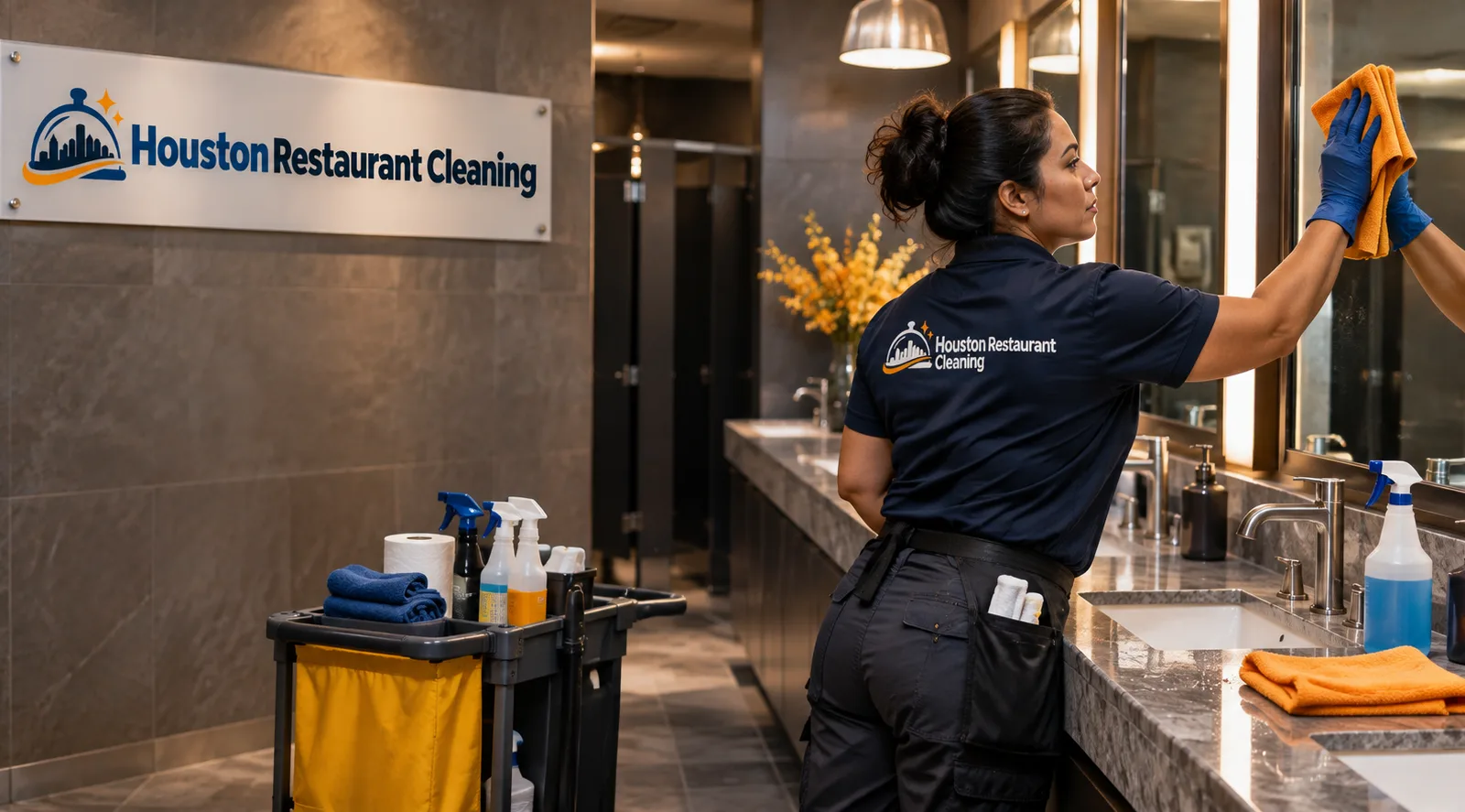
Restroom cleaning · Houston
Keep guest restrooms clean, stocked, and ready for every shift with a recurring janitorial plan built around your operating hours.
Built around guest traffic
Restaurant Restroom Cleaning requires more than a quick wipe of the counters. High guest turnover leaves fingerprints on partitions, residue around fixtures, paper on floors, and odors that can return if toilets, urinals, drains, and touchpoints are not cleaned correctly. Houston Restaurant Cleaning builds the work around your service schedule so the restroom is ready when employees arrive or the next meal period begins.
Our team works as a restaurant service company Houston homeowners rely on for practical scheduling, written scopes, and consistent attention to the areas guests notice. That includes mirrors without streaks, clean dispensers, dry floors, stocked consumables, and fixtures free of visible soil. Daily, nightly, overnight, and other recurring schedules are available according to the restaurant's traffic and hours.
Houston's heat and humidity can make odor control and damp-floor management especially important. A proper routine removes the source of odor rather than covering it with fragrance. It also accounts for busy dining districts such as Downtown, where restaurants may have late closing times; Midtown, where evening traffic can create sharp restroom-use peaks; and the Heights, where compact restaurant layouts can limit janitorial staging space. The schedule and equipment plan should fit those conditions.
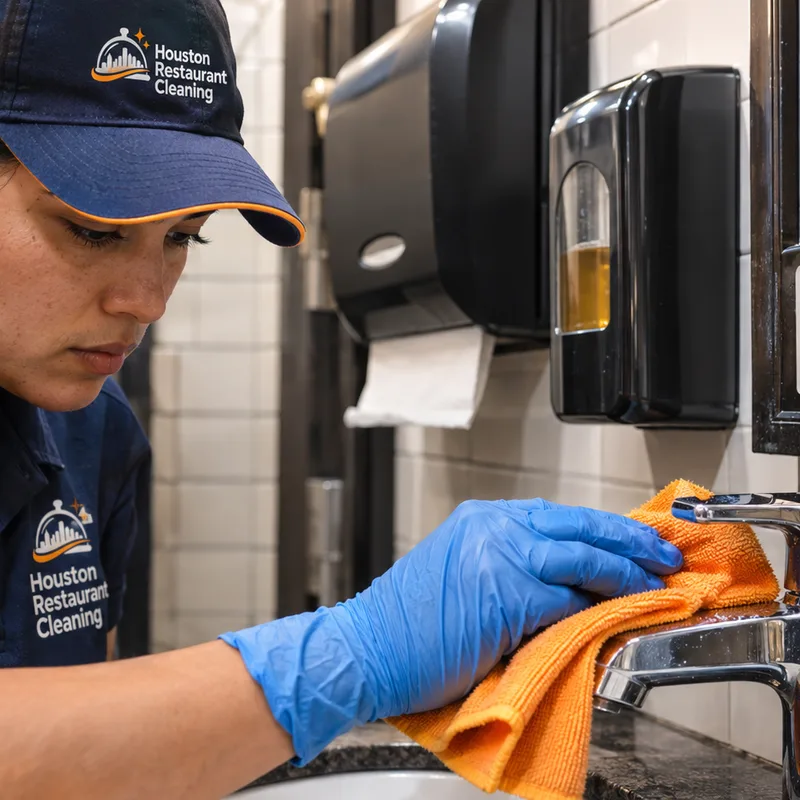
A clear restroom scope assigns tasks by frequency. Each visit can include cleaning and disinfecting toilets, urinals, sinks, faucets, flush handles, stall latches, grab bars, baby-changing surfaces, door handles, and other high-touch points. Crews wipe mirrors, partitions, ledges, dispensers, and accessible wall surfaces. Floors are swept or vacuumed, then damp mopped with a product suited to the flooring.
Service can also include emptying and relining waste and sanitary-product receptacles, checking paper supplies and soap, removing visible splash marks, and cleaning around fixture bases. Restocking is based on the supplies kept at the property and the responsibilities stated in the service agreement. Periodic detail work may address grout lines, floor edges, partitions, vents, and buildup that routine cleaning does not fully remove.
Cleaning and disinfection are separate steps. Soil should be removed before an EPA-registered disinfectant is applied, and the product must remain visibly wet for its label contact time. Color-coded microfiber cloths and restroom-dedicated tools help reduce cross-contamination with dining or food-preparation areas. Safety Data Sheets should remain available for the chemicals used at the facility.
Scheduling options
Daily service suits restaurants with steady restroom traffic. The scope can prioritize sanitation, trash removal, floor care, supply checks, and the reset needed before the next operating period.
Night service starts after guest traffic has eased or the dining room has closed. It gives the crew access to stalls, floors, and fixtures without working around customers.
Overnight scheduling fits late-closing operations and larger scopes that require more time. Access instructions, alarm procedures, key control, and completion expectations are documented before service begins.
A recurring plan assigns routine and periodic tasks instead of treating every visit as a standalone cleanup. Frequencies can be adjusted when operating hours, seating volume, or restroom use changes.
A repeatable service plan
We review fixture counts, floor and partition materials, dispenser types, current condition, storage access, and the times when cleaning can occur safely. Odor sources, damaged fixtures, and maintenance issues are distinguished from removable soil.
The written scope identifies tasks for every visit and less frequent detail work. It also records whether the restaurant or janitorial company supplies liners, paper products, soap, and other consumables.
For restaurant night cleaning, the plan covers arrival windows, entry procedures, alarm instructions, restricted areas, and where equipment may be staged. This is especially useful for Downtown properties with shared building access or limited loading options.
Crews work in a repeatable order, generally starting with high surfaces and touchpoints before finishing the floor. A final check covers fixtures, dispensers, waste containers, odors, and floor condition.
Restaurant traffic changes with operating schedules, events, and seasonal demand. The scope can be revised when supplies run out too quickly, detail tasks need a different frequency, or restroom use increases.
Working around closing time
A good overnight plan starts with timing. The crew needs enough access after the last guests leave, while restaurant management needs confidence that doors, alarms, and restricted areas will be handled according to written instructions. Houston Restaurant Cleaning coordinates an arrival window and completion expectations before recurring work begins.
Local operating patterns matter. Restaurants near the George R. Brown Convention Center may experience irregular traffic tied to large events. Montrose dining rooms often run active evening schedules, which may favor cleaning after the final seating. In the Galleria area, restaurant access can depend on a larger retail, hotel, or mixed-use property's procedures. These conditions affect start times and access planning, so they should be addressed before the first overnight visit.
Restaurant Janitorial Services Houston operators select should also account for slip prevention. Restrooms must be closed or controlled while wet work is underway, caution signs should remain in place, and floors should be left clean and as dry as practical before reopening. Cleaning products must be compatible with tile, resilient flooring, natural stone, metal fixtures, and partition finishes.
Selecting a recurring provider
Compare providers by the detail in their scope, not by a vague promise to clean the restroom. A useful proposal identifies visit frequency, service windows, tasks included each time, periodic detail work, consumable responsibilities, and the process for reporting supply shortages or facility problems. Ask how the company prevents restroom tools from being used in food-service areas and how chemicals are labeled and stored.
The restaurant should also know who handles issues that cleaning cannot correct. Persistent sewer odors, loose toilets, leaking faucets, failed exhaust fans, broken dispensers, and damaged grout may require plumbing, mechanical, or repair work. A responsible cleaning crew reports those conditions instead of masking them.
For recurring work, consistency depends on inspection and communication. Managers should have a clear method for raising concerns, changing access instructions, and updating the scope. Houston Restaurant Cleaning can prepare a plan based on the actual restrooms, operating schedule, and desired service frequency rather than a generic checklist.
Get a written restroom-cleaning scope with clear frequencies, access procedures, and supply responsibilities before recurring service begins.
Call for a Free QuoteService questions
Pricing is usually based on the number and size of restrooms, fixture count, visit frequency, existing condition, service window, and included consumables. A small restroom cleaned on a recurring schedule requires a different labor plan than several high-traffic restrooms needing overnight service and periodic detail work. A walkthrough at the restaurant is the best way to establish an accurate written price.
Yes, nightly and overnight restaurant cleaning can be scheduled after closing when suitable access is available. The service plan should document the arrival window, entry method, alarm procedure, restricted areas, and lockup responsibilities. Restaurants in shared Downtown or Galleria-area properties may also need to coordinate with building management.
The right frequency depends on restroom traffic, operating hours, fixture count, and the standard expected by management. Busy restaurants may need daily professional cleaning plus staff checks during service, while lower-volume locations may use a different recurring schedule. Paper levels, visible soil, odor, waste volume, and floor condition help determine whether the frequency is adequate.
Restocking can be included when the responsibility and supply source are stated in the agreement. Some restaurants purchase and store their own paper, liners, and hand soap, while others want supply management included. Dispenser types and available storage should be documented during the walkthrough.
Visit time depends on restroom size, fixture count, soil level, floor material, and whether the scope includes routine cleaning or periodic detailing. Overnight Restaurant Cleaning may allow more time for grout lines, partitions, edges, and buildup than a short reset between operating periods. The expected service window is confirmed after inspection.
Cleaning can remove odors caused by soil, waste, splash residue, dirty grout, and neglected fixture bases, but it cannot repair plumbing or ventilation defects. If odor remains after thorough cleaning, the cause may involve a dry trap, leak, damaged seal, drain issue, or failed exhaust fan. The crew should report the condition so the appropriate trade can assess it.
Yes, recurring restaurant cleaning can be adjusted when hours, events, or customer volume change. Properties near the George R. Brown Convention Center, for example, may encounter event-driven traffic that alters restroom use. Schedule changes are easier when requested before the affected service window.
Tell Houston Restaurant Cleaning about your restroom layout, operating hours, current trouble spots, and preferred frequency. We will use those details to prepare a practical janitorial scope for daily, nightly, overnight, or recurring service.