
Cooking Equipment
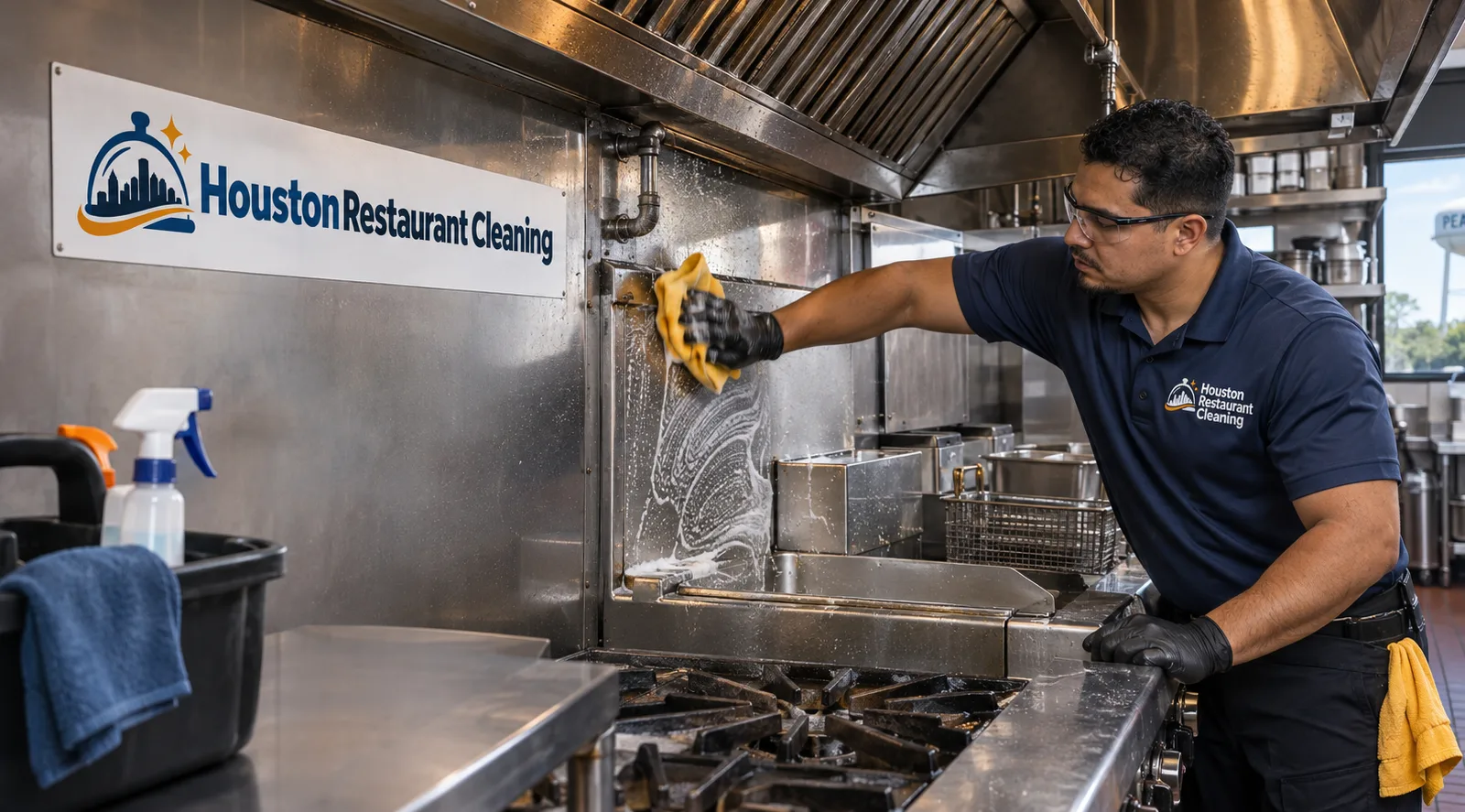
Ranges, griddles, charbroilers, fryers, ovens, and steam equipment receive attention around accessible surfaces, removable parts, control surrounds, doors, legs, and splash zones.
Serving Houston, Texas & surrounding areas
Equipment cleaning · Pearland
Remove baked-on grease and food residue from hard-working kitchen equipment with a planned service built around your operating schedule.
Built for working kitchens
Restaurant Equipment Cleaning Pearland addresses the residue that ordinary surface wiping leaves behind. Grease migrates beneath removable parts, carbon collects around cooking areas, and spills dry along equipment sides and bases. These deposits can create odors, attract pests, make inspections harder, and shorten the useful life of components when they are ignored.
Houston Restaurant Cleaning handles planned equipment cleaning for restaurants and other commercial food operations in Pearland. Our team of Houston's restaurant service specialists develops the scope around the equipment present, its condition, safe access, and the time available outside active food preparation. The goal is practical: clean accessible surfaces and components thoroughly while protecting controls, electrical connections, identification labels, and surrounding finishes.
Pearland sits directly south of Houston, with restaurant activity around Broadway Street, the SH 288 corridor, and mixed retail developments such as Pearland Town Center. Kitchens in these areas can face long service periods and limited shutdown windows. Scheduling the work after closing, before opening, or during a planned maintenance period gives the crew room to work without disrupting food production.
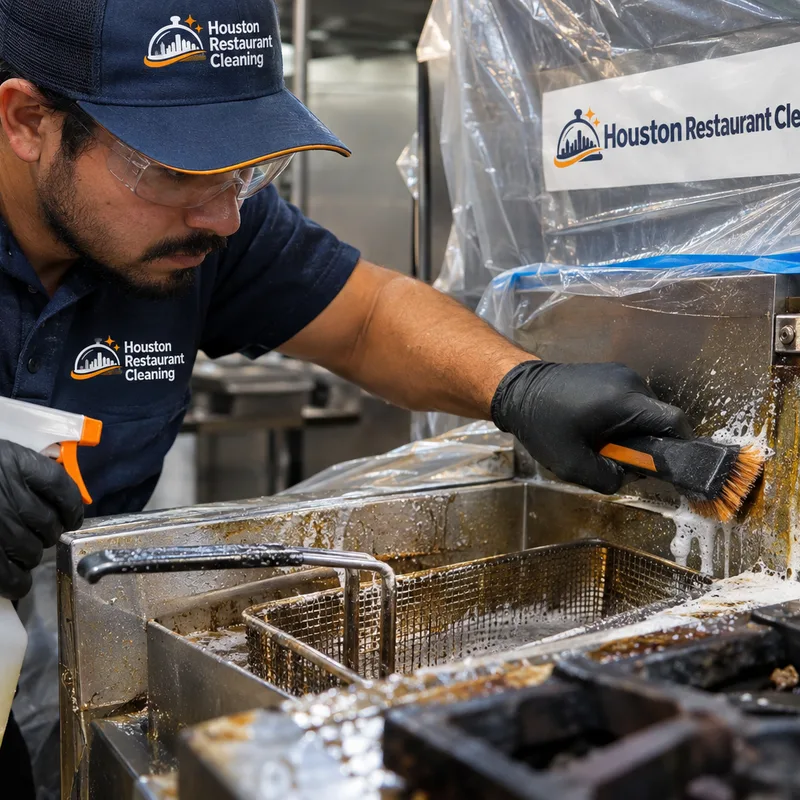
A scope may include fryers, ranges, ovens, griddles, charbroilers, steam tables, preparation tables, refrigerators, freezers, shelving, and other commercial kitchen assets. Cleaning focuses on equipment exteriors, doors, handles, legs, casters, removable racks, drip trays, accessible undersides, and reachable areas behind or between units. Manufacturer instructions and equipment condition determine which parts can be removed safely.
Different residues need different methods. Food-safe degreasers help loosen oily deposits, while controlled scraping and non-damaging pads address cooked-on carbon. Stainless steel must be cleaned with its grain to reduce visible scratching. Technicians also need to keep liquid away from burner assemblies, electrical controls, motors, vents, and open connections. Equipment should be cool, shut down, and prepared according to the agreed plan before work starts.
The written scope should distinguish equipment cleaning from exhaust-system work, internal appliance repair, pest treatment, and fire-suppression service. Those tasks require different procedures or qualified specialists. Clear boundaries protect the equipment and help restaurant managers understand exactly what will be completed.
Area-by-area care
Ranges, griddles, charbroilers, fryers, ovens, and steam equipment receive attention around accessible surfaces, removable parts, control surrounds, doors, legs, and splash zones.
Refrigerator and freezer exteriors, handles, door edges, casters, tops, and accessible condenser-area surroundings can be cleaned without flooding electrical or ventilation components.
Stainless preparation tables, slicer exteriors, mixer bodies, shelving, and mobile carts can be degreased and detailed after food and detachable processing parts have been removed.
Reachable spaces beneath, beside, and behind equipment are cleared of crumbs, grease, and dried spills when units can be moved safely without disconnecting utilities.
Racks, trays, drip pans, guards, and similar components may be cleaned separately when removal is permitted by the manufacturer and included in the agreed scope.
Cleaned surfaces are rinsed or wiped as required by the product instructions, dried, visually checked, and returned to the agreed position for staff review.
A controlled workflow
We identify equipment types, heavy buildup, sensitive components, utility connections, access restrictions, and the restaurant's available service window. Photos or an on-site walkthrough can help define the work.
The plan lists the equipment and accessible areas included, any preparation required from restaurant staff, and the expected work period. Kitchens should stop food preparation in the treatment area before the crew begins.
Food, utensils, disposable goods, and loose supplies are removed or protected. Equipment is allowed to cool, and controls or utilities are handled according to the agreed shutdown procedure.
Technicians apply suitable cleaning products, allow the required dwell time, agitate buildup, and clean removable components separately where appropriate. Low-moisture methods are used around sensitive assemblies.
The crew checks the included surfaces, dries them, replaces approved components, and reviews the work area. Restaurant staff remain responsible for any required equipment startup and operational checks.
Pearland scheduling
A freestanding restaurant near a major roadway may have more room for crew access and staging than a tenant kitchen in a shared retail property. In areas such as Pearland Town Center, property rules, loading access, neighboring businesses, and restricted service hours may affect scheduling. Along Broadway Street, operators may need cleaning timed around lunch and dinner demand. Near the SH 288 corridor, early morning or overnight work can be useful for kitchens that serve commuters and evening traffic.
Southeast Texas heat and humidity also matter. Greasy soils can stay tacky, and damp equipment cavities should not be left closed after cleaning. Controlled product application, complete wiping, and adequate drying reduce moisture around seams and sensitive components. The crew should never spray water indiscriminately into commercial appliances.
Managers can help by identifying equipment that cannot be moved, confirming which units can be shut down, emptying surfaces, and arranging access to locked areas. If equipment has damaged wiring, active leaks, loose panels, or failed controls, repair should come before cleaning around that defect.
Maintenance support
Regular cleaning makes kitchen conditions easier to manage between deep services. Staff can see fresh spills sooner, casters and legs remain more accessible, and maintenance technicians can reach panels without first cutting through layers of grease. Clean equipment exteriors also support a more orderly workspace during health inspections and daily opening checks.
Cleaning does not certify equipment, guarantee code compliance, or replace maintenance. In Pearland, food establishments are subject to applicable health and safety requirements administered by the relevant local and state authorities. Operators remain responsible for food-safety procedures, equipment condition, required inspections, and records. A professional cleaning service supports that work by removing the physical buildup included in its scope.
Frequency depends on menu, cooking volume, equipment design, staffing, and current condition. Fryers and charbroilers often need more frequent attention than lightly used preparation equipment because airborne grease and carbon accumulate quickly around high-heat cooking. A visual review of equipment sides, backs, bases, handles, and removable trays is more useful than following an arbitrary calendar.
Planning the investment
Restaurant equipment cleaning in Pearland typically costs about $300 to $1,500 for a scheduled kitchen service. A small scope covering several accessible units may fall near the lower end, while a large cook line with heavy carbon and grease can exceed the upper range. Final pricing depends on equipment count, buildup, removable parts, access behind units, required shutdown procedures, and after-hours scheduling. Exhaust systems, repairs, and disconnected utility work are priced separately when applicable. The exact cost is confirmed after an equipment review and written scope.
Request a CallbackService questions
Yes, after-hours service may be scheduled when crew availability and building access allow it. The operating plan should account for equipment cooldown, security access, retail-property restrictions, drying time, and the restaurant's next opening period.
A limited equipment scope may take several hours, while a heavily soiled cook line or larger kitchen may require a full shift or phased visits. Equipment count, carbon buildup, access, removable components, and the time needed for safe cooldown determine the schedule.
Equipment is moved only when it can be repositioned safely without straining fixed gas, electrical, water, refrigeration, or fire-suppression connections. Heavy or hard-connected units may remain in place, with cleaning limited to safely accessible surfaces and gaps.
Yes, exposed food, utensils, packaging, and loose preparation items should be removed from the work zone or protected according to the agreed preparation plan. Cold storage should remain closed and operational unless its cleaning has been specifically arranged.
Equipment cleaning does not automatically include hood, fan, filter, or duct cleaning. Commercial kitchen exhaust work has separate access, documentation, and safety requirements, so it must be identified and scoped independently.
No, equipment in the work area should be shut down and cooled to a safe temperature before detailed cleaning begins. Restaurant management should coordinate shutdown and restart procedures, especially for gas-fired, electrical, refrigerated, or programmed units.
The right interval is based on actual buildup, menu, cooking volume, and manufacturer guidance rather than one fixed schedule. High-heat equipment that produces grease and carbon usually needs review more often than low-use preparation tables or storage units.
A clear equipment list, current-condition review, and operating schedule are enough to start building a practical cleaning scope for your Pearland kitchen.
Call for a Free QuoteTell Houston Restaurant Cleaning what equipment needs attention, when the kitchen is available, and where buildup is heaviest. We will help define the scope and a workable service window.