
Cook-Line Floors
Degreasing targets the film around fryers, ranges, grills, and nearby traffic paths. Movable equipment can be shifted when access and site conditions allow.
Serving Houston, Texas & surrounding areas
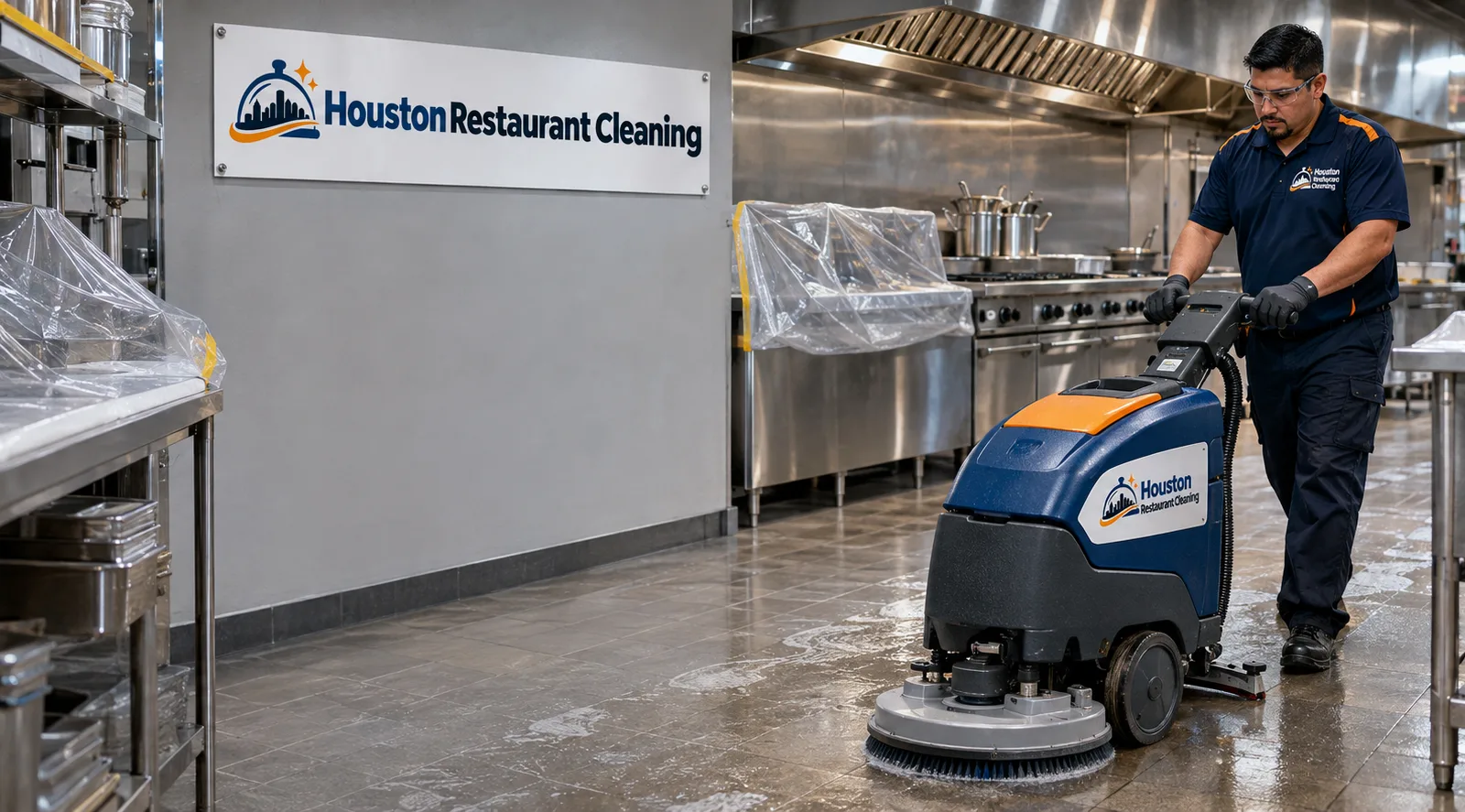
Restaurant floor cleaning · Sugar Land
Remove grease, tracked-in soil, and stubborn buildup with a cleaning plan fitted to your flooring, kitchen schedule, and food-service operation.
Built around restaurant service
Restaurant Floor Cleaning Sugar Land businesses depend on requires more than a quick mop after closing. Grease can spread from the cook line into prep areas and service corridors, while drink residue, food particles, and tracked-in soil collect around tables, under equipment, and along edges. Houston Restaurant Cleaning addresses those conditions with commercial degreasers, agitation, extraction, and floor-specific methods.
Our Houston-based crew works as restaurant service specialists serving Houston and nearby Sugar Land. Before work starts, we review the floor material, soil level, drainage, equipment access, and available cleaning window. That review helps us set a practical scope for kitchens, dining rooms, restrooms, entries, storage areas, and employee work zones without treating every surface the same.
Hot, humid Gulf Coast conditions can make odor and residue control especially important in food-service spaces. Frequent rain also brings more grit and moisture through entrances. A planned floor-cleaning schedule removes that material before it becomes packed into grout lines, textured tile, corners, and other difficult areas.
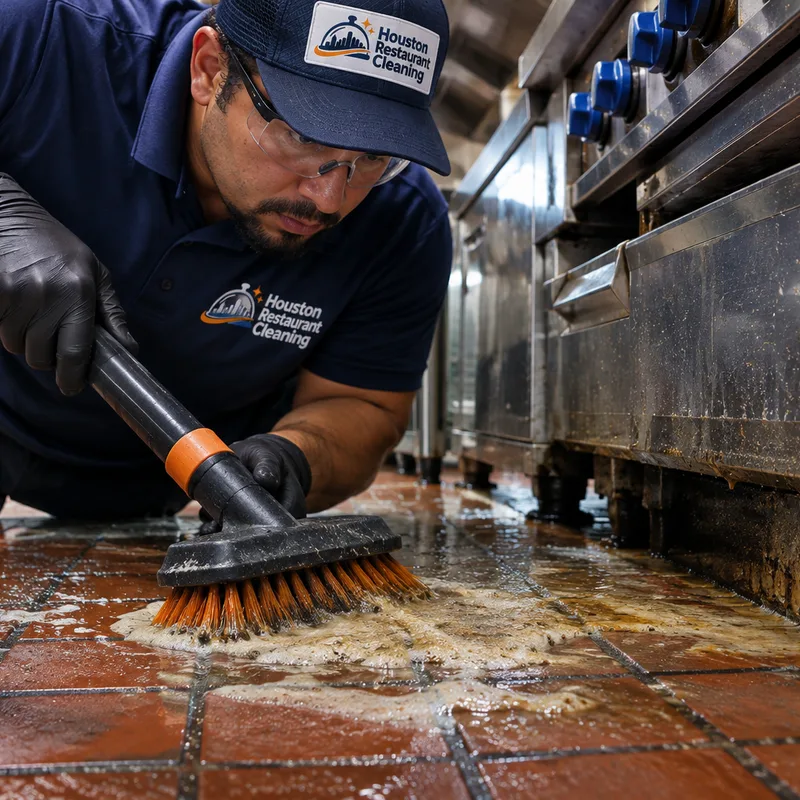
Commercial kitchen floors often use quarry tile, ceramic tile, sealed concrete, or resilient flooring. Each material has limits. Quarry tile and grout may tolerate strong agitation, while resilient flooring can be damaged by excessive alkalinity, aggressive brushes, or standing solution. We identify the surface before selecting chemicals, dwell time, brush pressure, and recovery equipment.
Heavy kitchen grease generally needs an alkaline degreaser and enough dwell time to loosen the film. Mechanical agitation with a deck brush, rotary machine, or auto scrubber breaks up embedded residue. Wet extraction or controlled rinsing then removes the suspended soil rather than spreading it across the floor. Edges, corners, coving, grout joints, and areas around fixed equipment receive separate attention because large machines cannot reach them.
The final approach also depends on floor drains, slip-resistant texture, and the condition of existing coatings. We avoid leaving excess chemical residue, which can make a floor tacky and attract soil faster. Any visible damage, loose grout, failed sealant, or worn coating is documented because cleaning cannot repair a deteriorated substrate.
Area-by-area floor care
Degreasing targets the film around fryers, ranges, grills, and nearby traffic paths. Movable equipment can be shifted when access and site conditions allow.
Detailed cleaning addresses food residue, detergent film, grout lines, floor edges, and the damp zones around sinks and dish machines.
The method is adjusted for tile, sealed concrete, or resilient flooring, with attention to table bases, perimeter soil, spills, and customer traffic lanes.
Entry grit, tracked-in moisture, restroom residue, and odor sources require separate tools and chemicals to reduce cross-contamination.
Hand detailing reaches corners, coving, thresholds, and spaces around fixed equipment that an auto scrubber cannot cover.
A recurring scope can prioritize high-soil zones while scheduling periodic detail work for grout, perimeters, and low-access areas.
A controlled floor-care workflow
We identify floor materials, greasy zones, drainage, movable equipment, damaged areas, and the time available before the space must return to use.
The plan defines included rooms, equipment access, chemicals, machinery, and drying needs. Work may be arranged after closing or during another approved low-traffic period.
Dry debris is collected first. Appropriate items are moved or protected, and caution controls are placed to keep people away from wet work zones.
The selected cleaning solution is applied at the proper dilution and given time to work. Brushes or commercial floor machines loosen grease and embedded grime.
Dirty solution is extracted or rinsed toward approved drainage where suitable. Technicians clean grout joints, corners, coving, and equipment perimeters by hand.
The crew checks for remaining residue, collects standing moisture, and reviews any maintenance concerns. Floors need adequate drying time before normal traffic resumes.
Local operational planning
Sugar Land restaurants range from small neighborhood dining rooms to larger operations near major commercial corridors. A compact kitchen may have limited room to move equipment, while a high-volume operation may need phased work so food storage, prep, and service areas remain controlled. The scope should reflect the actual layout rather than rely on a flat checklist.
Scheduling matters as much as cleaning method. The kitchen should have time to cool where needed, food and utensils must be protected, and staff traffic must stay outside active work zones. Floors may also need extra drying time in humid conditions. We coordinate the sequence so cleaned areas are not immediately crossed by hoses, carts, or workers moving between unfinished zones.
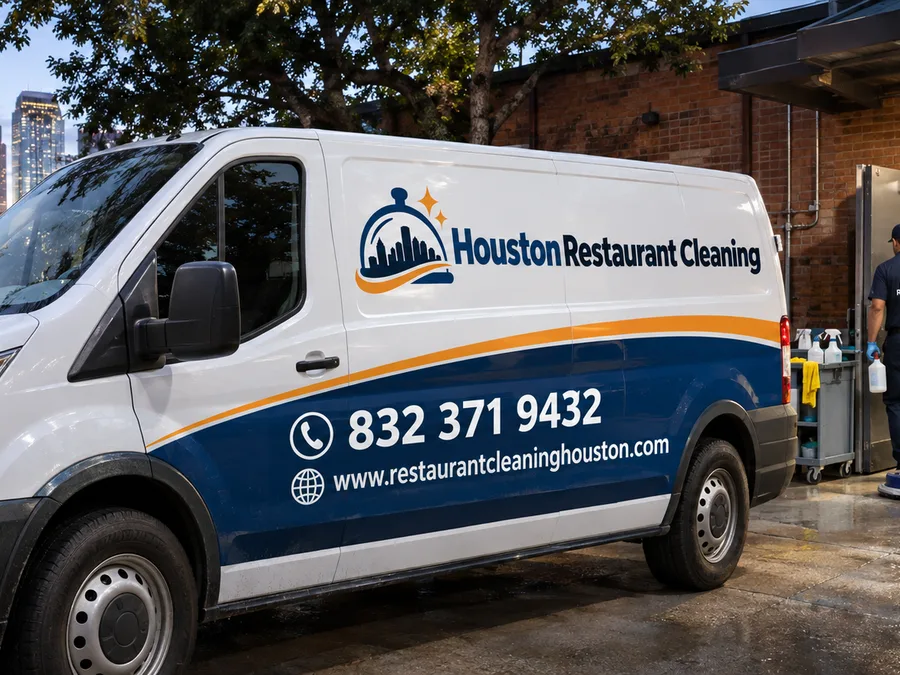
Houston Restaurant Cleaning is based on Spring Street in Houston and serves Sugar Land businesses with project-based and recurring floor care. A written scope can identify included areas, access requirements, expected downtime, and responsibilities for moving equipment before the appointment.
A cleaner maintenance baseline
Daily mopping is necessary, but a mop bucket becomes less effective as grease and soil accumulate. If the solution is not changed often enough, residue can be redistributed over a larger area. Textured tile and recessed grout also hold material beyond the reach of a flat mop.
Professional equipment applies repeatable agitation and recovers the dirty solution. This gives managers a cleaner baseline for daily maintenance and makes persistent problem areas easier to identify. It also helps distinguish removable buildup from permanent staining, worn grout, etched tile, or coating failure.
A deep clean should support the restaurant's own food-safety and workplace procedures, but it does not replace them or guarantee regulatory compliance. The City of Sugar Land is in Fort Bend County, and food establishments must follow the requirements that apply to their operation. Managers remain responsible for sanitation schedules, spill response, employee practices, pest control, and safe access throughout the facility.
For recurring care, frequency should be based on cooking volume, menu, floor texture, foot traffic, and how quickly grease returns. Fry-heavy kitchens commonly need more attention around the cook line than dining rooms do. We can separate frequent high-soil cleaning from periodic full-floor detailing so the schedule matches actual conditions.
Get a written cleaning scope built around your floor materials, kitchen access, operating hours, and highest-soil areas.
Call for a Free QuoteFloor-cleaning questions
Pricing depends on cleanable square footage, floor material, grease level, equipment access, and whether the work is one-time or recurring. Heavy buildup, extensive grout detailing, and equipment that must be moved add labor. After-hours access and drying constraints may also affect the scope. An on-site review provides the clearest basis for written pricing.
A small, accessible floor may be completed within one cleaning window, while a large or heavily soiled kitchen may require phased work. Setup, degreaser dwell time, agitation, extraction, edge detailing, and drying all affect timing. Sugar Land's humid conditions can slow drying, so the return-to-service time should be considered when setting the appointment.
Yes, after-hours cleaning can often be arranged around the restaurant's operating schedule and site access. The kitchen may need time to cool, and food, utensils, and movable items must be secured before work begins. Managers should also allow enough time for the floor to dry before employees return.
Yes, quarry tile and cementitious grout can be degreased and mechanically agitated when their condition permits. Grout may retain discoloration after soil is removed, especially if it is worn or unsealed. Loose grout, cracked tile, and failed joints require repair rather than stronger cleaning.
Deep cleaning can remove grease and chemical film that contribute to poor traction, but it cannot correct every slip hazard. Worn texture, damaged tile, standing water, drainage problems, unsuitable footwear, and active spills can still create risk. The floor should be inspected and maintained as part of a broader safety program.
Accessible areas beneath movable equipment can be included when movement is safe and agreed upon in advance. Gas, electrical, plumbing, weight, and clearance restrictions may prevent technicians from moving certain appliances. The pre-service inspection identifies which equipment the restaurant must relocate or have disconnected by a qualified party.
The right frequency is set by soil load rather than a universal calendar. Cooking volume, fryer use, traffic, floor texture, daily maintenance, and inspection findings all matter. A Sugar Land operation with heavy grease migration may need targeted cook-line service more often than full dining-room cleaning.
Staff should remove exposed food and utensils, empty or secure low storage, identify equipment that can be moved, and provide clear access to the scheduled areas. Existing leaks, damaged flooring, sensitive coatings, and drainage restrictions should be disclosed before work. The crew can then confirm the work sequence and expected drying period.
Tell Houston Restaurant Cleaning about the flooring, grease conditions, access limits, and preferred service window. We will help define a practical scope for your Sugar Land restaurant.