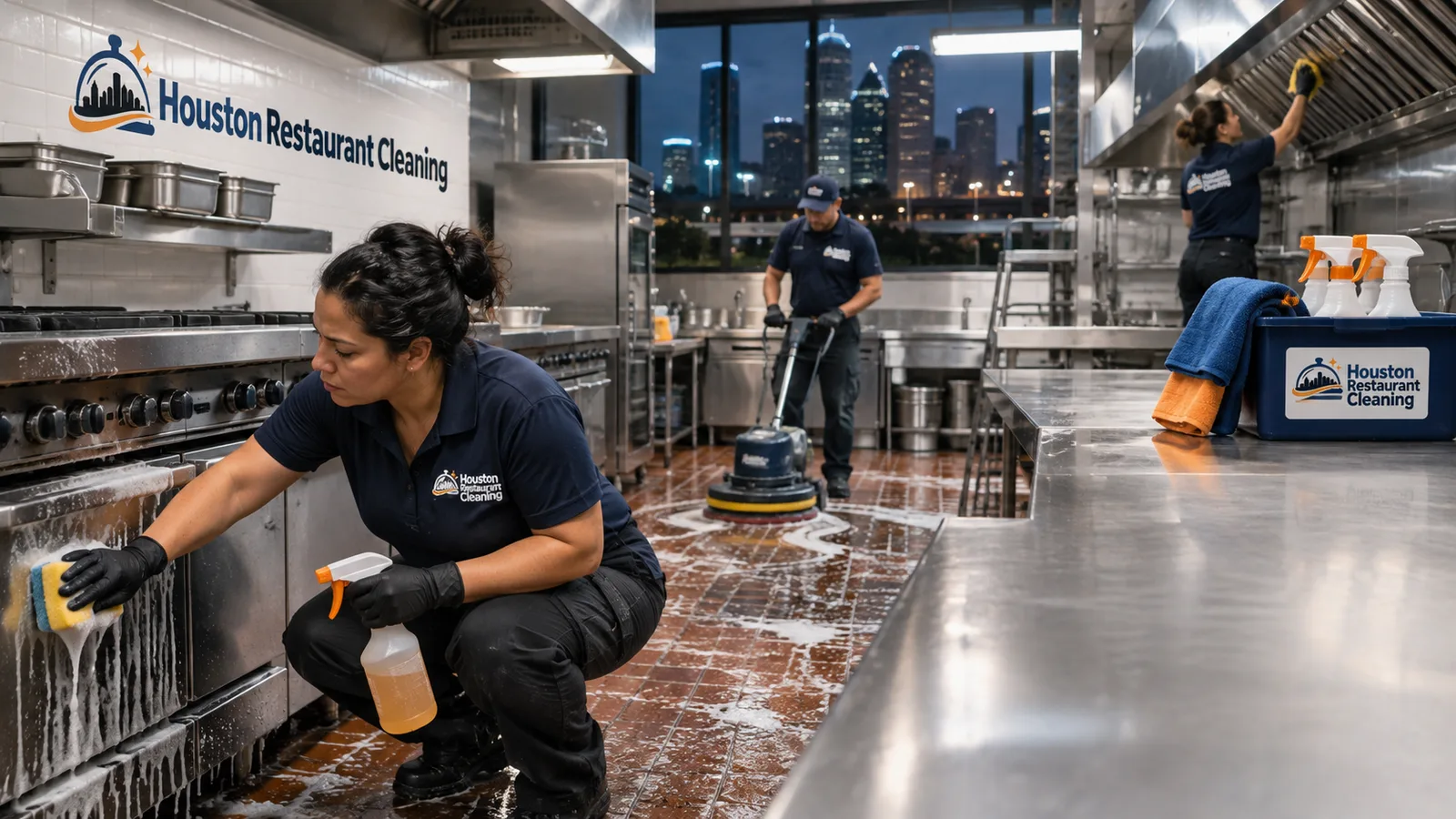
A trained cleaning crew performing detailed overnight cleaning in a Houston commercial restaurant kitchen, with stainless steel equipment, floors and prep surfaces visible.

Restaurant cleaning · Houston

Restaurant Cleaning Company

Houston Crews
Commercial Kitchens

Detailed cleaning for commercial kitchens, dining areas, walk-in coolers and hard-to-reach surfaces, planned around your operating schedule.

Commercial kitchens and cook lines Walk-in cooler cleaning Dining areas and high dusting Planned around operating hours

Built around your operation

Professional Restaurant Deep Cleaning Built Around Your Operation

A restaurant cleaning company should understand that food-service spaces cannot be treated like ordinary offices. Grease migrates beyond the cooking line, crumbs settle beneath fixed equipment, condensation affects cooler surfaces and airborne residue collects on vents, pipes and ledges. Houston Restaurant Cleaning develops a written scope based on your layout, equipment, operating hours and priority areas.

We plan the work as a professional restaurant service company in Houston around access, shutdown time and the condition of each area. Before cleaning begins, the crew confirms which equipment may be moved, which systems must remain powered and which surfaces require special handling. This practical preparation helps protect sensitive components and gives managers a clear understanding of what is included.

Professional restaurant deep cleaning is useful before an inspection, after construction, during a management transition or as part of a recurring maintenance plan. It also addresses buildup that daily closing duties cannot reasonably cover. The goal is a cleaner, more manageable facility without disrupting the next service period.

Request a Callback

Surface-specific care

Commercial Kitchen Deep Cleaning in Houston

Request a Callback
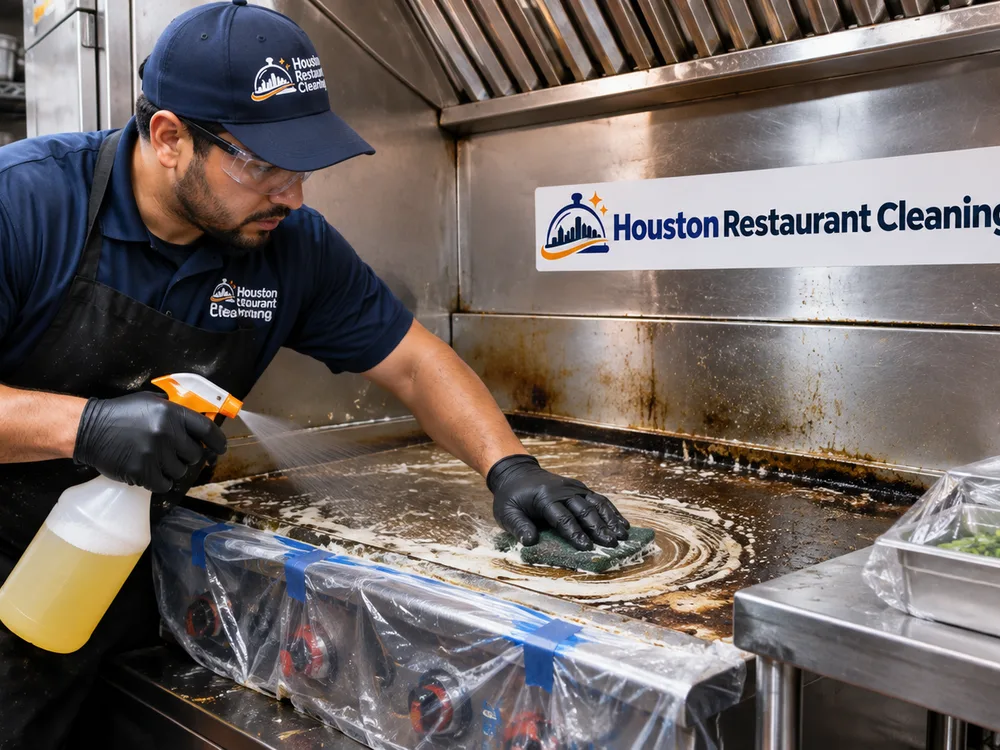
A restaurant cleaner applying degreaser and hand-agitating residue on a stainless steel cook line while electrical controls and nearby food-contact items are protected.
Surface-specific methods help remove grease without careless overspray.

Kitchen deep cleaning starts with the actual soil load. A high-volume cook line may have carbonized grease around equipment legs and casters, while a bakery or prep kitchen may need more attention on flour dust, shelving and floor edges. The cleaning method should match both the residue and the surface.

Typical work can include degreasing backsplashes, equipment exteriors, prep tables, shelving, walls, baseboards, floor drains and accessible areas beneath movable equipment. Crews may use dwell time, agitation and controlled rinsing to loosen grease rather than relying on aggressive chemicals alone. Stainless steel is cleaned with the grain, and electrical controls are protected from direct spray.

Cleaning exhaust hoods and accessible exterior surfaces is different from certified hood and duct fire-suppression work. The scope should clearly identify what is included and whether a specialist is needed for internal exhaust-system service. That distinction matters when managers compare restaurant deep cleaners.

Area-by-area scope

Restaurant Detailed Cleaning by Area

Cook Lines and Prep Areas

Degreasing can cover equipment exteriors, stainless steel tables, backsplash surfaces, shelving, wheels, legs and accessible spaces beneath movable units. Food-contact surfaces receive an appropriate final treatment based on the agreed scope.

Walk-In Cooler Cleaning

Walk-in cooler cleaning can address shelving, walls, doors, gaskets, floors and accessible fan guards. Product handling, temperature control and equipment restrictions must be agreed upon before work starts.

Floors, Edges and Drains

Service can target grease film, corners, grout lines, floor-wall junctions and accessible drains. The crew selects methods that suit quarry tile, concrete, resilient flooring or other installed materials.

Dining and Guest Areas

Detailed care can include table bases, chair legs, booths, ledges, entry glass, partitions and perimeter edges. Work is scheduled so surfaces have adequate drying time before guests return.

Restrooms and Employee Areas

Fixtures, partitions, touchpoints, walls, floors and break-area surfaces can be incorporated into the scope. Special attention is given to corners and buildup around fixture bases.

High Dusting

High dusting in Houston restaurants can cover accessible vents, pipes, rafters, light housings and overhead ledges. Crews isolate the work zone and control falling debris before lower surfaces receive final cleaning.

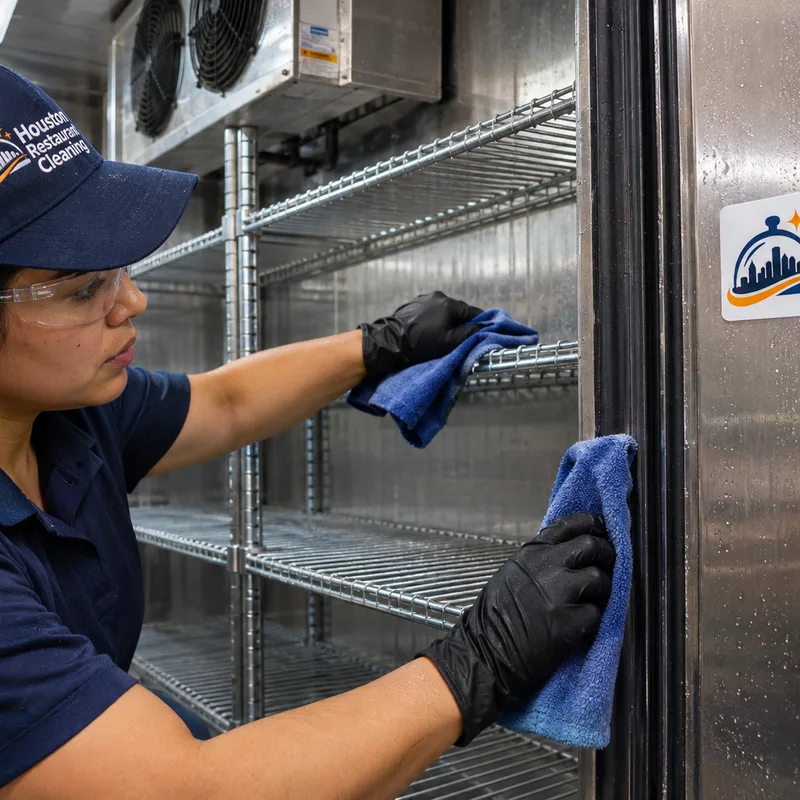
A cleaner wiping empty walk-in cooler shelving and door gaskets while food products are safely removed from the immediate work zone.
Cooler scopes should account for inventory, temperature and equipment restrictions.

Cold-storage care

Walk-In Cooler Cleaning Requires Careful Planning

A walk-in is an active refrigerated environment, so cleaning begins with operational questions. The crew needs to know whether food will remain inside, which shelving can be cleared, where products may be staged and whether the evaporator or controls have service restrictions. Cleaning chemicals must also be compatible with interior finishes and used according to their labels.

The work may include removable shelving, wall and ceiling panels, door tracks, handles, gaskets, floor edges and accessible surfaces around the evaporator housing. Ice, standing water, damaged gaskets, loose panels or active leaks should be reported rather than hidden by cleaning. Mechanical repairs and refrigerant work require an appropriate service contractor.

Houston's warm, humid conditions make controlled scheduling especially useful when a cooler must be opened for extended cleaning. Limiting door-open time and coordinating product movement helps the operator protect temperature-sensitive inventory.

Request a Callback

A controlled workflow

How Restaurant Deep Cleaning Services Are Planned

Shift-Ready
Detail Checked
  1. 01

    Walk Through the Facility

    The initial review identifies cooking equipment, floor materials, cooler access, overhead surfaces, sensitive controls and any spaces that must remain operational.

  2. 02

    Define the Written Scope

    The scope lists included areas, exclusions, equipment-moving limits, access needs and the condition being addressed. Photos may help document heavy buildup or restricted spaces.

  3. 03

    Coordinate the Service Window

    Managers confirm entry, alarm procedures, shutdown requirements and the time when the facility must be ready for staff. In Downtown Houston, loading access and building rules may affect arrival planning. In Montrose and the Heights, smaller restaurant footprints can require tighter staging of hoses, tools and equipment.

  4. 04

    Protect and Clean

    Food, utensils and sensitive items are removed or covered as agreed. Crews work through the facility in a planned sequence, using degreasers, agitation, extraction or controlled rinsing where appropriate.

  5. 05

    Inspect the Completed Work

    A final review checks the agreed areas, confirms that equipment and access points are left as specified, and records maintenance concerns noticed during cleaning.

Request a Callback

Practical scheduling

Restaurant Deep Cleaning Houston Operators Can Schedule With Confidence

Scheduling depends on the restaurant's service pattern. An overnight window may suit a dinner operation, while an early-morning appointment can work better for a bar or late-night venue. Restaurants near the Texas Medical Center may have strict building access and continuous traffic considerations. Large dining rooms and entertainment-oriented venues in Downtown Houston may need phased cleaning so furniture, equipment and supplies can be staged safely.

Scope matters as much as timing. Ask whether the estimate covers equipment exteriors or the areas behind movable units, whether high dusting is included, and how walk-in cooler contents will be handled. Confirm who is responsible for moving heavy appliances and reconnecting gas, water or electrical lines. Cleaning crews should not disconnect regulated utilities or attempt repairs outside the agreed work.

Restaurant detailed cleaning can be scheduled as a focused project or recurring service. A first visit often addresses established buildup. Later visits can concentrate on defined rotation items such as overhead surfaces, cooler interiors, floor edges and equipment undersides.

Request a Callback

Get a written cleaning scope based on your kitchen layout, operating hours and priority areas before the service window is scheduled.

Call for a Free Quote

Service questions

Questions About Professional Restaurant Deep Cleaning

How much does restaurant deep cleaning cost in Houston?

Restaurant deep cleaning is priced according to the facility's size, soil level, included areas and required labor time. A compact kitchen with accessible equipment will be different from a large operation requiring walk-in cooler cleaning, high dusting and work beneath a heavily used cook line. After-hours access, parking, loading restrictions and equipment-moving requirements can also affect the quote. An on-location review is the best way to establish an exact written price.

Can restaurant deep cleaners work after closing?

Yes, restaurant deep cleaners can schedule work after closing when access and completion times are confirmed in advance. The crew needs enough time for setup, cleaning, final inspection and surface drying before employees return. Houston venues with building security, loading-dock rules or alarm procedures should provide those instructions during scheduling.

What should we do before kitchen deep cleaning?

Remove or secure food, utensils, small appliances and personal items from the agreed work areas before kitchen deep cleaning. Managers should also identify sensitive equipment, active leaks, damaged flooring and anything the crew may not move. If gas or electrical equipment must be disconnected, arrange for qualified personnel rather than expecting the cleaning crew to perform utility work.

Can you clean a walk-in cooler while it is operating?

Many walk-in cooler cleaning tasks can be completed while the system operates, but the plan depends on product storage, temperature requirements and manufacturer restrictions. Inventory may need to be moved or consolidated, and the door should not remain open longer than necessary. Mechanical components, refrigerant systems and electrical repairs are outside a cleaning scope.

Is high dusting safe over food preparation areas?

High dusting can be performed safely when food, utensils and preparation surfaces are removed or fully protected before overhead work starts. The crew should control falling debris, clean from higher areas downward and complete a final wipe of lower surfaces. Work over an active prep line should not occur while food production is underway.

How long does commercial kitchen deep cleaning take?

A commercial kitchen deep cleaning may require several hours or a full service window, depending on square footage, equipment density and accumulated grease. Cooler interiors, overhead structures and areas beneath appliances add time. The expected duration is established after the facility review so the work can finish before the next Houston service period.

Can deep cleaning guarantee that a restaurant will pass an inspection?

No cleaning company can guarantee the outcome of a regulatory inspection. Professional cleaning can address sanitation and buildup within the contracted scope, but inspectors may also review food temperatures, employee practices, pest activity, equipment condition and other operational matters. Houston restaurants should treat deep cleaning as one part of an ongoing food-safety program.

Plan Your Restaurant Deep Cleaning

Tell Houston Restaurant Cleaning about your facility, operating schedule and problem areas. The next step is a practical scope that identifies what will be cleaned, what preparation is needed and how the work fits your service hours.