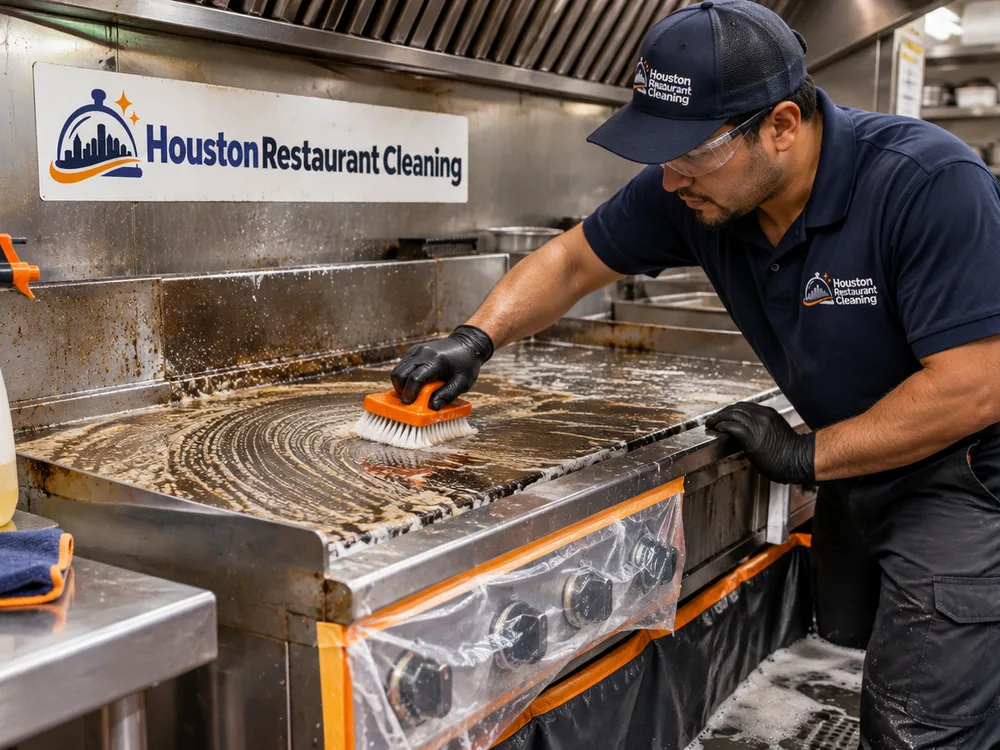
A professional cleaner degreasing stainless steel cooking equipment in a Houston restaurant kitchen while nearby food-contact surfaces remain protected.

Kitchen cleaning · Houston

Kitchen Cleaning Services

Houston Crews
Commercial Kitchens

Detailed commercial cleaning for cooking equipment, prep areas, floors, walls and vent hoods, scheduled around your restaurant's operating hours.

Cooking equipment and cook lines Prep and warewashing areas Floors, walls and accessible surfaces Scheduled around operating hours

Built around operations

Professional Cleaning Built Around Restaurant Operations

Kitchen Cleaning Services remove the grease, carbon, food residue and soil that ordinary closing routines cannot fully address. Houston Restaurant Cleaning works with restaurants that need scheduled deep cleaning, targeted equipment cleaning or help restoring a heavily used kitchen to a maintainable condition.

A useful scope starts with the way the kitchen operates. High-volume fry lines need different attention than bakeries, coffee shops or kitchens centered on grills and charbroilers. We review equipment, surfaces, access, buildup and operating hours before setting priorities. As an experienced restaurant service team in Houston, TX, we plan the work around active commercial kitchens and identify which equipment must be cool, moved or protected before cleaning begins.

Houston's heat and humidity can make grease-laden kitchens uncomfortable and slow drying in poorly ventilated areas. Proper dwell time, controlled rinsing and complete extraction matter. Kitchens near Downtown's late-night dining trade may need overnight scheduling, while restaurants in the Galleria area often have loading, parking or building-access rules that affect arrival and equipment setup. In Montrose, compact kitchens can require staged cleaning because equipment and service aisles leave little working room. These details belong in the plan before a crew arrives.

Request a Callback

Defined commercial scope

What Commercial Kitchen Cleaning Services Cover

Request a Callback
A technician manually agitating degreaser on a restaurant cook line, with electrical controls protected and wash water contained.

Controlled application and extraction protect sensitive equipment and surrounding work areas.

A commercial kitchen deep cleaning can cover the cook line, preparation areas, warewashing zones, storage spaces and the surfaces around fixed equipment. The exact scope should be written clearly because every kitchen has a different layout and mix of appliances.

Common work includes degreasing stainless steel, cleaning equipment exteriors, treating backsplashes, scrubbing floors, cleaning walls, removing buildup around legs and casters, and detailing accessible areas beneath or behind movable units. Low-pressure application and manual agitation are often safer than indiscriminate high-pressure washing around electrical connections, pilot assemblies and sensitive controls.

Food-contact surfaces require careful product selection, rinsing and any sanitizing step specified by the product label and the restaurant's procedures. Grease and wash water also need controlled collection. They should not be pushed outdoors or into storm drains. Before service, the restaurant should remove or protect exposed food, utensils, packaging and single-service items.

Area-by-area care

Restaurant Kitchen Cleaning by Area

Cook Lines and Equipment

Kitchen equipment cleaning can address ranges, fryers, grills, charbroilers, ovens, hot holding units and other accessible appliance surfaces. Equipment condition, manufacturer guidance and utility connections determine how each item is handled.

Floors, Walls and Hard Surfaces

Degreasing and mechanical scrubbing remove tracked soil and oily residue from suitable floors. Attention is given to edges, corners, base areas, wall panels and the accessible spaces around equipment.

Preparation and Warewashing Areas

Worktables, sinks, shelving and surrounding surfaces can be cleaned after food, dishes and loose items are cleared. Cleaning removes soil first; sanitizing is a separate step performed with an appropriate product and contact time.

Hoods and Accessible Canopy Surfaces

Visible hood canopy surfaces and removable filters may be included when stated in the scope. Exhaust-system cleaning inside ducts and at the rooftop fan requires specialized procedures and must be identified separately.

Walk-Ins and Storage Areas

Walk-in floors, shelving and accessible interior surfaces can be scheduled after food is removed or safely consolidated. The plan should protect temperature control and minimize how long doors remain open.

Targeted Detail Cleaning

Focused service can address an inspection concern, a neglected appliance bank, turnover between operators or buildup in difficult access points without requiring the same scope throughout the kitchen.

Know the exhaust scope

Restaurant Vent Hood Cleaning in Houston

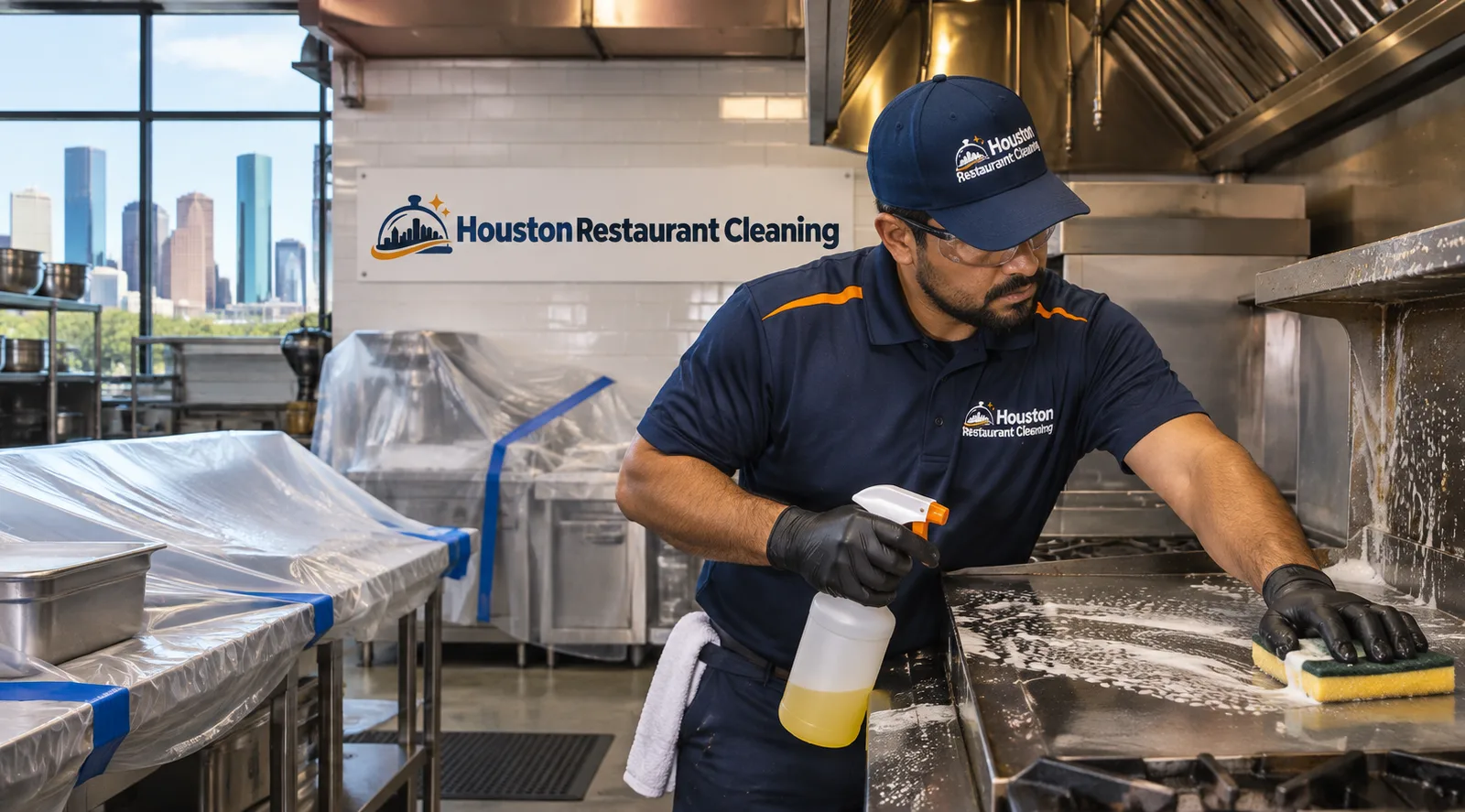
A request for restaurant vent hood cleaning in Houston should distinguish visible canopy cleaning from complete kitchen exhaust system cleaning. Wiping the hood's exterior and washing removable filters does not clean concealed ductwork or the exhaust fan.

A complete exhaust cleaning scope may include the plenum, accessible ductwork and fan components. Access panels, fan condition and rooftop access affect how the work is performed. NFPA 96 is the nationally recognized standard addressing ventilation control and fire protection for commercial cooking operations, while the authority having jurisdiction and the restaurant's fire-safety or insurance requirements may also affect service expectations. A qualified provider should document what was cleaned rather than describe every hood service as identical.

Houston restaurants also need to consider roof access and weather. Thunderstorms can make rooftop fan work unsafe, so a vent hood appointment may need to be adjusted even when interior work can continue. If a kitchen requires both exhaust-system service and general restaurant kitchen cleaning, coordinating the schedule helps prevent residue from one task from soiling an area that was already finished.

Request a Callback

A controlled workflow

How Our Kitchen Cleaning Services Work

Shift-Ready
Detail Checked
  1. 01

    Review the Kitchen and Priorities

    We discuss the kitchen layout, equipment list, hours, access restrictions and problem areas. Photos or an on-location review may be needed when buildup, rooftop access or fixed equipment affects the scope.

  2. 02

    Confirm a Written Scope

    The plan identifies included surfaces, exclusions, preparation duties and the expected service window. It also notes whether appliances need to be shut down, cooled, emptied or moved by restaurant staff.

  3. 03

    Protect and Prepare the Work Area

    Food and loose utensils are cleared or covered, sensitive components are protected, and the crew sets up containment for grease, cleaning solution and recovered water.

  4. 04

    Degrease, Agitate and Extract

    Cleaners apply suitable products, allow label-directed dwell time and use hand tools or mechanical agitation where appropriate. Residue is rinsed or wiped away and wastewater is recovered using the planned method.

  5. 05

    Inspect and Return the Area

    The crew checks included surfaces, removes protective materials and identifies any inaccessible buildup or equipment condition that limited cleaning. Restaurant staff can then complete their opening, sanitation and equipment-startup procedures.

Request a Callback

Choosing a cleaning crew

Choosing a Kitchen Cleaning Company

Compare companies by the clarity of their scope, not by a short list of appliances. Ask whether the proposal covers only visible surfaces or also the sides, backs and undersides of movable equipment. Confirm who moves appliances, disconnects utilities, clears food and handles wastewater. The proposal should also state whether hood work includes the canopy alone or the complete exhaust path.

Professional kitchen cleaning requires products and methods suited to commercial materials. Strong alkaline degreasers can damage aluminum and some painted finishes. Excess water can enter electrical controls, and aggressive pressure can force residue into gaps. A responsible cleaner identifies these risks, tests uncertain surfaces and does not promise that permanent discoloration, corrosion or carbonized damage will wash away.

Scheduling matters as much as technique. Restaurants in EaDo may need cleaning planned around event traffic and late service, while kitchens serving the Texas Medical Center can have narrow delivery and production windows. Houston Restaurant Cleaning builds the service window around shutdown, cooling, drying and reopening needs rather than treating access time as cleaning time.

Request a Callback
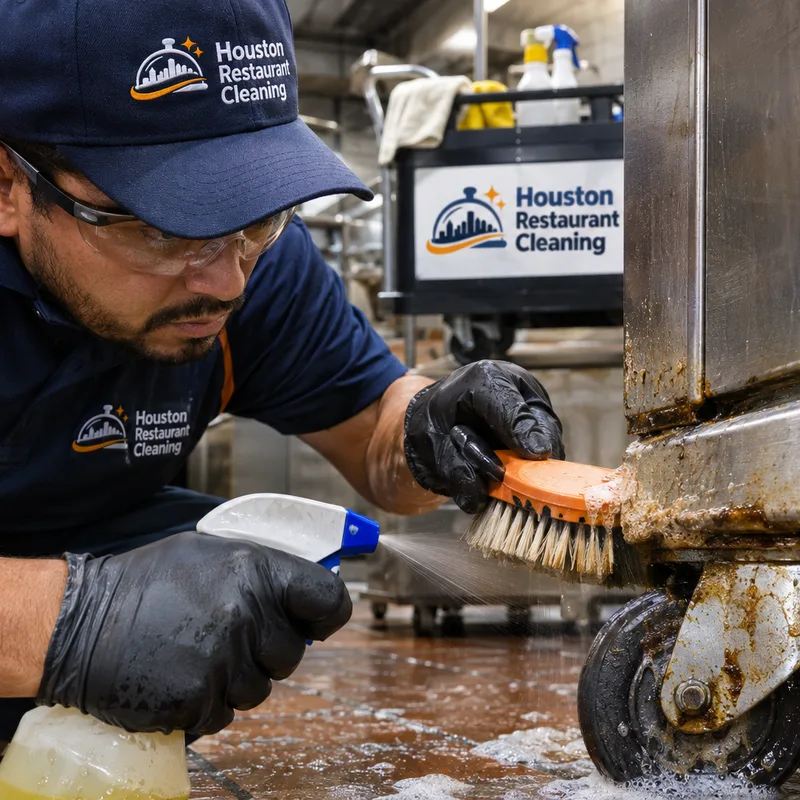
Close view of a restaurant cleaner detailing grease buildup along equipment edges and casters using commercial hand tools and controlled chemical application.
Edges, casters and narrow gaps often hold residue missed during routine closing work.

Share the equipment, problem areas and preferred service window to receive a written cleaning scope built around your kitchen's operating schedule.

Call for a Free Quote

Service questions

Questions About Commercial Kitchen Cleaning in Houston

How much do commercial kitchen cleaning services cost?

Commercial kitchen cleaning is usually quoted after the provider reviews kitchen size, equipment count, grease buildup, access and the requested scope. A focused appliance or floor-cleaning visit costs less than an overnight deep clean of the cook line, prep areas, walls and storage spaces. Hood canopy work and complete exhaust-system cleaning should be priced as distinct scopes. Houston building access, rooftop requirements and restricted service windows can also affect labor and setup.

How often should a restaurant schedule kitchen deep cleaning?

The right frequency depends on cooking volume, fuel type, menu and how quickly grease accumulates. A high-volume fryer or charbroiler line may need targeted cleaning more often than a low-grease preparation kitchen. Routine closing work should continue between professional visits. Exhaust-system inspection and cleaning frequency should be based on the cooking operation, applicable NFPA 96 criteria, and any requirements set by the relevant fire authority or insurer.

Can professional kitchen cleaning be completed overnight?

Yes, overnight service can often be arranged when the kitchen can shut down, cool and remain accessible long enough for cleaning and drying. The restaurant must account for hot fryers, ovens, pilot systems and equipment that cannot be cleaned immediately after service. Downtown and Montrose restaurants with late operating hours may need a staged scope or an early-morning finish so the kitchen is ready for opening procedures.

Does restaurant kitchen cleaning include moving equipment?

Movable equipment can be repositioned when the scope and site conditions allow it, but utility-connected or unusually heavy units require advance planning. Restaurant staff may need to disconnect gas, electrical or water connections through an appropriate qualified person. The written scope should assign responsibility for moving each appliance and state which spaces are inaccessible.

Is vent hood cleaning included with kitchen equipment cleaning?

Vent hood cleaning is included only when it is specifically listed in the agreed scope. Visible canopy surfaces, removable filters, the plenum, ducts and rooftop fan are separate parts of an exhaust system. A complete restaurant vent hood cleaning job may require roof access and specialized containment, especially in multi-tenant Houston buildings where access and discharge protection must be coordinated.

What must a restaurant do before the cleaners arrive?

The restaurant should remove or protect food, utensils, packaging and small equipment, then shut down and cool appliances identified in the scope. Staff should also provide access to water, electrical service, loading areas and any keys or roof points required for the work. Walk-ins or storage areas should be consolidated in advance so temperature-sensitive products remain protected.

Can deep cleaning remove every stain and burn mark?

Deep cleaning removes cleanable grease, soil and food residue, but it cannot reverse corrosion, etched metal, failed coatings or permanent heat discoloration. Thick carbon may require repeated treatment, and aggressive removal can damage the underlying surface. An initial inspection helps separate removable buildup from material damage before the work begins.

Plan a Cleaner Commercial Kitchen

Tell Houston Restaurant Cleaning about your kitchen layout, equipment and operating hours. We will help define the work, preparation requirements and a practical service window before cleaning starts.