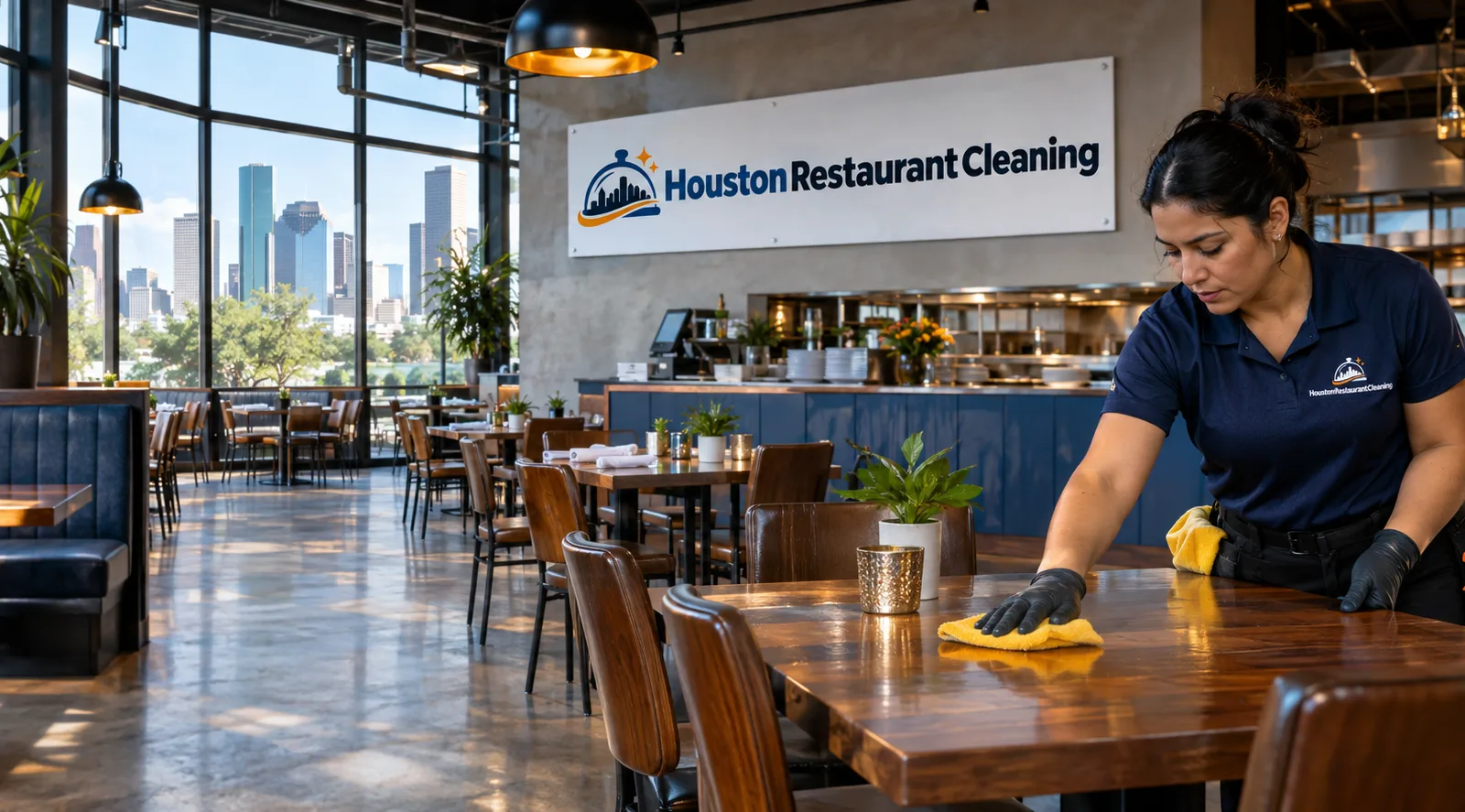
A professional cleaner preparing a polished Houston restaurant dining room before opening, with clean tables, floors, seating, and service stations visible.

Restaurant cleaning · Houston

Restaurant Cleaning Services in Houston

Houston Crews
Restaurant Spaces

Keep guest areas polished, service spaces sanitary, and floors ready for the next shift with a cleaning plan built around your operating hours.

Dining rooms and bars Restrooms and entrances Floors and high dusting Scheduled around operating hours

Built around service

Restaurant Cleaning Services Built Around Your Operation

Restaurant Cleaning Services should address what guests notice and what employees depend on every shift. Houston Restaurant Cleaning handles dining rooms, bars, restrooms, floors, entry areas, service stations, and back-of-house spaces according to a written scope. Cleaning can be scheduled around opening, closing, deliveries, and staff prep so the work does not interfere with service.

Our team works as restaurant service specialists serving Houston, TX, with attention to the practical details that affect food-service facilities. Those details include greasy soil near kitchen transitions, drink residue around bars, fingerprints on glass, debris beneath fixed furniture, and dust on ledges that routine wiping may miss. We start by reviewing the layout, surface types, traffic patterns, access instructions, and priority areas. The result is a repeatable plan rather than a generic checklist.

Houston's heat and frequent rain can increase tracked moisture and soil at entrances. Restaurants near the walkable dining and nightlife activity of Downtown and Midtown may also need closer attention to doors, vestibules, restrooms, and floors during busy periods. In the Heights, where restaurants often occupy converted or compact buildings, crews may need to work carefully around tight storage areas and mixed flooring. The Galleria and Uptown area has restaurants serving heavy retail, office, and visitor traffic, which can make daytime presentation and dependable after-hours service especially important.

Request a Callback

Room-by-room scope

Cleaning for Every Restaurant Work Zone

Restaurant Dining Room Cleaning

Dining Area Cleaning can include tables, chairs, booths, partitions, host stands, ledges, reachable fixtures, baseboards, glass, and spot cleaning on doors and walls. Crews work around the room methodically so corners and spaces beneath furniture are not skipped.

Restaurant Bar Cleaning

Bar cleaning addresses counters, stools, rails, mirrors, exterior cabinet faces, glass partitions, floor edges, and accessible surfaces around beverage stations. The scope can be coordinated with staff responsibilities to avoid confusion over equipment, bottles, and food-contact items.

Restaurant Floor Cleaning

Floor care is matched to the material and soil level. Vacuuming, dust mopping, damp mopping, machine scrubbing, and spot treatment may be used for carpet, tile, sealed concrete, resilient flooring, or other manufacturer-approved surfaces.

Restaurant Restroom Cleaning Houston

Restroom service covers toilets, urinals, sinks, counters, partitions, mirrors, dispensers, touchpoints, and floors. Cleaning and disinfection are separate steps: visible soil is removed first, then an appropriate disinfectant is applied for its labeled contact time.

High Dusting

High dusting targets accessible vents, pipes, beams, ledges, light housings, and other elevated surfaces where settled dust may accumulate. The inspection determines safe access and whether nearby tables, equipment, or merchandise must be protected first.

Restaurant Back Of House Cleaning Houston

Back-of-house work may cover employee areas, corridors, storage-room floors, washable exterior surfaces, and kitchen-adjacent traffic lanes. Any food-contact surface, specialized equipment, hood system, or hazardous condition must be identified and assigned clearly before work starts.

Guest-ready presentation

Front Of House Cleaning That Protects the Guest Experience

Restaurant Front Of House Cleaning Houston operators can rely on starts at the entrance. Glass should be free of obvious smears, host areas should look orderly, and floors should not carry yesterday's grit into a new service period. Inside the dining room, cleaning should follow a consistent route through booths, chairs, table bases, partitions, window sills, baseboards, and service stations.

The correct method depends on the surface. A neutral cleaner may suit many finished floors, while carpet requires vacuuming and periodic extraction based on fiber type and manufacturer guidance. Wood, stone, sealed concrete, and luxury vinyl can react differently to moisture, alkalinity, and abrasion. Product labels and floor-care instructions guide chemical selection rather than a one-product approach.

Cleaning frequency should reflect actual use. A quiet weekday lunch and a packed weekend service do not leave the same soil load. Houston Restaurant Cleaning can divide tasks into per-visit duties and rotating detail work, such as baseboard washing, chair-leg cleaning, high dusting, or deeper floor care. That structure keeps daily work manageable while preventing less visible areas from being ignored.

Request a Callback
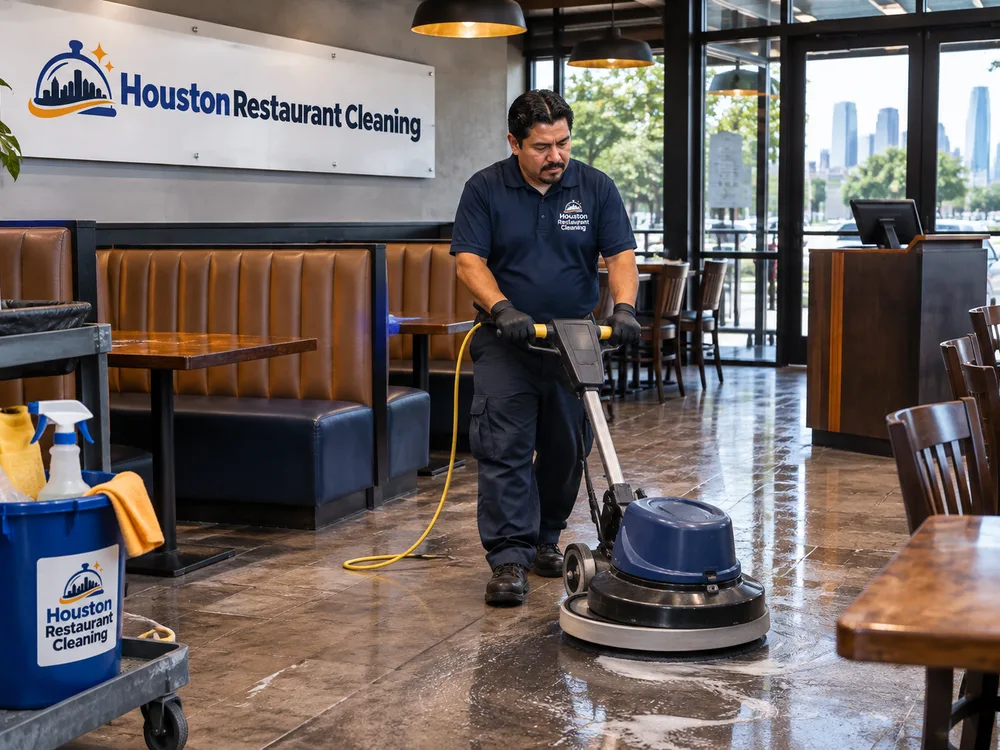
A restaurant cleaner using commercial floor equipment in an empty dining area while tables, booths, entrance glass, and a host stand are ready for detailed cleaning.
Floor methods are selected for the surface, finish, and level of soil.

A repeatable workflow

How the Cleaning Plan Is Set Up

Shift-Ready
Detail Checked
  1. 01

    Walk Through the Restaurant

    We review the dining room, bar, restrooms, entrances, service stations, back-of-house access, flooring, elevated surfaces, and any areas excluded from the work. We also discuss alarms, keys, parking, loading access, and preferred service windows.

  2. 02

    Define Tasks and Frequency

    The written scope separates recurring cleaning from rotating detail work. It identifies who handles consumable restocking, food-contact surfaces, equipment, waste, and specialty tasks so responsibilities are clear.

  3. 03

    Prepare for the First Service

    Before cleaning begins, the crew confirms access, product limitations, floor instructions, sensitive materials, and areas that must remain untouched. Restaurants should secure cash, personal property, alcohol inventory, and confidential records.

  4. 04

    Clean in a Controlled Sequence

    Crews generally work from higher surfaces to lower ones and from cleaner areas toward more heavily soiled zones. Separate tools or color-coded cloths can reduce cross-contamination between restrooms, dining spaces, and back-of-house areas.

  5. 05

    Review and Adjust

    After the initial visits, the scope can be refined around recurring trouble spots, seasonal traffic, event nights, and operating changes. Feedback is tied to specific rooms or tasks so corrections are direct and measurable.

Request a Callback
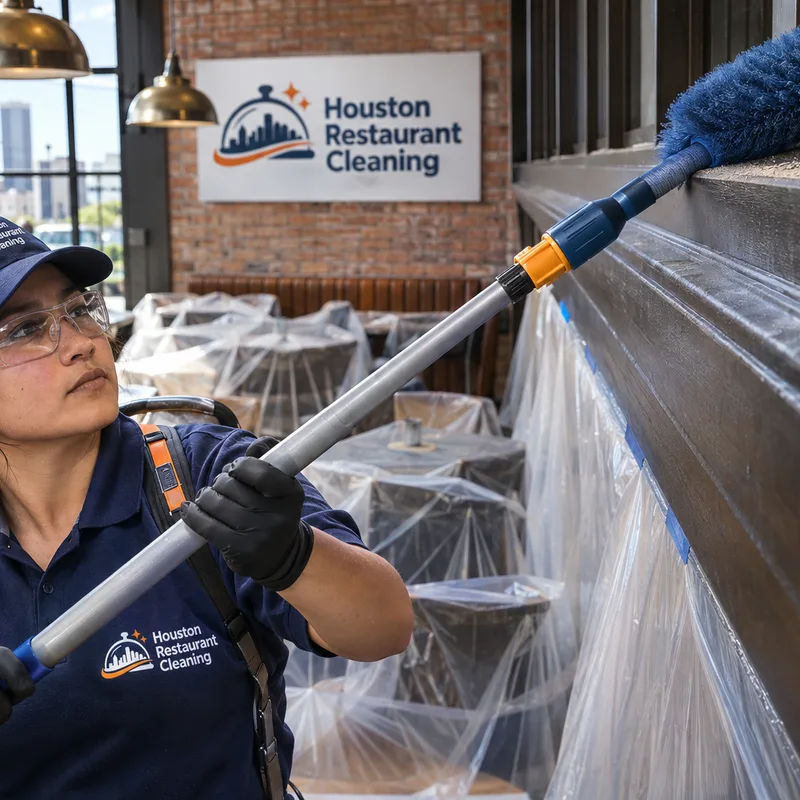
A trained cleaner using an extension dusting tool on an elevated restaurant ledge while dining furniture and lower surfaces are protected.
High dusting is completed before final cleaning of tables and floors.

Detail work by surface

Detailed Floor, Restroom, and High Dusting Work

Restaurant Floor Cleaning starts with dry soil removal because loose grit can scratch finishes and turn into mud when wetted. Corners, edges, chair legs, mats, and transitions deserve close attention. Where machine scrubbing is appropriate, pad or brush selection must suit the floor. Wet-floor controls and adequate drying time are part of planning, especially when employees arrive soon after service.

Restrooms require dedicated tools and an orderly process. Crews clean visible soil, address fixtures and partitions, wipe touchpoints, service mirrors and dispensers, then finish the floor. Disinfectants must remain visibly wet for the dwell time stated on the product label. Mixing chemicals or using an unapproved product on stone, metal, or finished flooring can cause damage and is avoided.

High Dusting is planned separately because overhead work can release debris onto lower surfaces. Accessible ledges, vents, pipes, and fixture exteriors are addressed before tables and floors receive final cleaning. Extra height, fragile décor, active cooking equipment, or restricted access may require a dedicated visit rather than inclusion in routine service.

Request a Callback

Responsibilities made clear

A Clear Scope for Front and Back of House

A dependable agreement states exactly what will be cleaned, how often it will be done, and which tasks remain with restaurant staff or specialty vendors. This matters in back-of-house areas, where general janitorial work can sit next to equipment cleaning, hood service, pest-control preparation, grease handling, and food-safety duties. Similar-looking tasks may require different training, chemicals, tools, or access.

Before service begins, tell us about delicate finishes, loose furniture, natural stone, newly coated floors, alarm procedures, locked storage, and any manufacturer restrictions. Safety Data Sheets and product labels provide handling instructions, dilution requirements, personal protective equipment guidance, and surface limitations. A responsible crew follows those directions instead of improvising.

Houston restaurants may also need schedules that change around private events, convention traffic, sports nights, patio use, or severe weather. Downtown properties may have restricted loading or building access, while Uptown locations can have parking and security procedures tied to larger developments. Those conditions belong in the service plan because they affect arrival, equipment movement, and the time available before staff returns.

Request a Callback

Set expectations before the first visit with a written cleaning scope based on your rooms, surfaces, operating schedule, and busiest service periods.

Call for a Free Quote

Service questions

Restaurant Cleaning Questions

How much do Restaurant Cleaning Services cost in Houston?

Restaurant cleaning is usually priced after the facility and required frequency are reviewed. Square footage matters, but the number of restrooms, floor materials, bar areas, soil level, service frequency, high dusting needs, access limits, and time available between closing and opening also affect labor. A walkthrough allows Houston Restaurant Cleaning to prepare a scope based on the actual work rather than square footage alone.

Can cleaning be completed after the restaurant closes?

Yes, service can be planned around closing, opening, prep, and delivery schedules when access arrangements and crew availability align. The plan should state alarm procedures, key or credential handling, locked areas, lighting expectations, and who receives reports about maintenance or access issues.

What is included in Restaurant Front Of House Cleaning in Houston?

Front-of-house cleaning commonly covers entrances, host stands, dining furniture, booths, partitions, service stations, reachable ledges, glass, floors, and guest restrooms. The exact list depends on the restaurant layout and on which tasks employees complete between services. Bars, patios, private dining rooms, and elevated surfaces should be named explicitly if they are included.

Does Restaurant Bar Cleaning include bottles and beverage equipment?

Bottles, taps, glassware, ice equipment, and beverage machinery are included only when the written scope specifically assigns them and safe procedures are established. General bar cleaning more often covers counters, rails, stools, exterior cabinet faces, mirrors, partitions, and floors. Restaurant staff should secure alcohol inventory and identify equipment that cleaners must not move or operate.

Can you clean the back of house without interrupting food preparation?

Back-of-house cleaning can be scheduled outside active preparation periods or divided into approved work zones. The restaurant must identify food-contact surfaces, hot equipment, chemical storage, restricted areas, and equipment handled only by trained staff or specialty vendors. Access is confirmed before work begins.

How often should restaurant floors receive deeper cleaning?

The interval depends on floor material, traffic, tracked soil, grease migration, finish condition, and daily maintenance. Houston rain can increase moisture and grit at entrances, while kitchen transitions may accumulate oily residue faster than dining-room edges. An initial inspection and follow-up review provide a sound basis for setting the frequency.

Can high dusting be included with recurring cleaning?

Yes, accessible high dusting can be placed on a rotating schedule when the height, surroundings, and access method allow safe work. Pipes, vents, beams, ledges, and fixture exteriors are assessed first. Areas over active equipment, fragile displays, or food preparation surfaces may need extra protection or separate scheduling.

What should a restaurant do before the first cleaning visit?

Secure cash, personal property, confidential records, alcohol inventory, and restricted supplies before the crew arrives. Remove or identify food, point out damaged surfaces, provide access instructions, and list any products or equipment that cleaners must not use. Floor-care guidance is especially useful for coated, wood, stone, or specialty surfaces.

Build a Cleaning Plan Around Your Restaurant

Tell Houston Restaurant Cleaning about your dining room, bar, restrooms, floors, back-of-house areas, and operating hours. We will help define the tasks and schedule needed to keep the restaurant ready for staff and guests.